I can still smell the scorched ozone and hot grease from my first summer in the fabrication shop, standing there with a heavy hammer feeling like I’d never get the rhythm right. Back then, I thought I needed the most expensive, high-tech welding rigs and computerized measuring tools to actually be useful, but I was dead wrong. Most folks today will try to sell you a fancy course or a piece of expensive machinery, claiming it’s the secret to success, but they’re missing the point entirely. Real metalwork apprentice skills aren’t found in a digital manual or a shiny new gadget; they’re built in the steady hand and the patience to listen to how the metal reacts to the heat.
I’m not here to give you any of that polished, textbook nonsense that sounds good in a classroom but fails the second you strike an arc. My goal is to lay out the practical, hard-earned fundamentals that actually matter when you’re standing over a workbench with real material in front of you. We’re going to focus on the grit and precision required to do a job right the first time, so you can stop wasting scrap and start building things that are actually worth keeping.
Table of Contents
Mastering Metallurgy Fundamentals Before Touching the Torch

Before you even think about striking an arc or heating up the forge, you need to understand what’s actually happening inside the grain of the metal. I’ve seen too many young folks jump straight into practicing welding techniques for beginners without knowing the difference between mild steel and something more temperamental like high-carbon alloy. If you don’t respect the chemistry, you’re just playing with fire. You need to grasp the metallurgy fundamentals—how heat affects the molecular structure and why a piece might crack after it cools.
It’s not just about the heat, though; it’s about knowing exactly what you’re working with. You should spend some time getting comfortable with your precision measurement tools before you ever make a cut. If your measurements are off by a hair because you were too impatient to check them twice, no amount of skill is going to save that project from being scrap. Understanding how different metals expand and contract is the difference between a part that fits perfectly and one that’s nothing more than a waste of good material.
Respecting the Shop Essential Metal Fabrication Safety Protocols
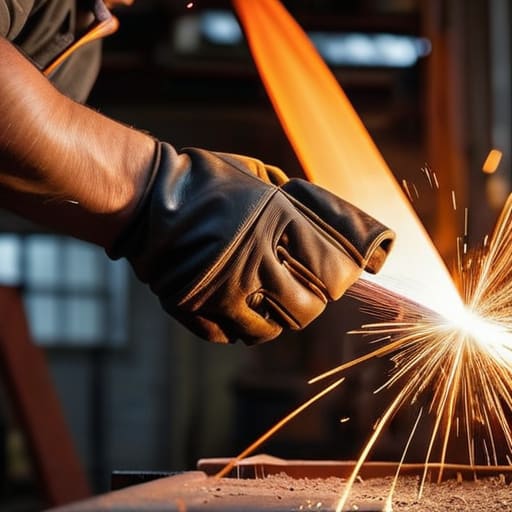
Now, before you even think about striking an arc or picking up a grinder, we need to talk about the most important part of the job: staying in one piece. I’ve seen too many young folks walk into a shop thinking they’re invincible, only to realize too late that metal doesn’t care about your ego. Following strict metal fabrication safety protocols isn’t about following some bureaucratic rulebook; it’s about respect. You respect the heat, you respect the sparks, and most importantly, you respect the machinery. If you treat an industrial grinder like a toy, it’ll bite you before you can even blink.
Keep your workspace organized and your gear inspected. I don’t care how much you want to get started on those welding techniques for beginners you’ve been reading about—if your gloves are frayed or your ventilation is blocked, you sit down and fix it first. A cluttered bench leads to a cluttered mind, and a cluttered mind leads to accidents. Always wear your eye protection, keep your skin covered to avoid UV burns, and never, ever work under pressure. If you’re rushing, you’re being unsafe. Take a breath, check your surroundings, and do it right the first time.
Five Lessons Learned the Hard Way
- Learn to read the metal’s color. You can’t rely on a digital readout to tell you when your steel is getting too brittle or when you’re about to burn through a thin sheet. You need to train your eyes to see that specific cherry red or the dull orange that tells you exactly how the heat is behaving.
- Get comfortable with a file before you ever touch a grinder. A grinder is a blunt instrument that eats material faster than you can blink, and it’ll ruin a fine edge in a heartbeat. A hand file teaches you the actual grain of the metal and gives you the control you need for precision work.
- Stop fighting your tools and start listening to them. If a drill bit starts screaming or a chisel feels like it’s bouncing instead of biting, something is wrong. Whether it’s too much pressure or the wrong angle, the tool will tell you exactly where you’re messing up if you’re quiet enough to listen.
- Measure twice, but check a third time with a different tool. I’ve seen plenty of young lads trust a single tape measure and end up with a workpiece that’s a sixteenth off. Grab your calipers or a square and verify that mark before you make a permanent cut.
- Keep your workspace organized, not just clean. A clean shop is good, but an organized shop means you know exactly where your 1/2-inch wrench is when you’re halfway through a heavy weld. If you’re hunting for tools, you’re losing your focus, and lost focus leads to mistakes.
Three Lessons to Carry Out of the Shop
Never mistake speed for skill; if you find yourself rushing to finish a weld or a bend, stop, step back, and check your work, because a mistake made in haste is just a waste of good material.
Listen to your tools and the metal itself, because a seasoned eye and a steady hand will tell you more about a piece of steel than any fancy digital readout ever could.
Treat your safety gear and your workspace with the same respect you give your finest tools, because a cluttered bench or a neglected respirator is a shortcut to an injury you won’t recover from.
## The True Measure of a Craftsman
“An apprentice who only learns how to follow a blueprint is just a pair of hands; you aren’t truly learning the trade until you can feel the heat in the air and hear the metal telling you exactly when it’s ready to bend.”
Alistair Fenwick
The Long Road Ahead
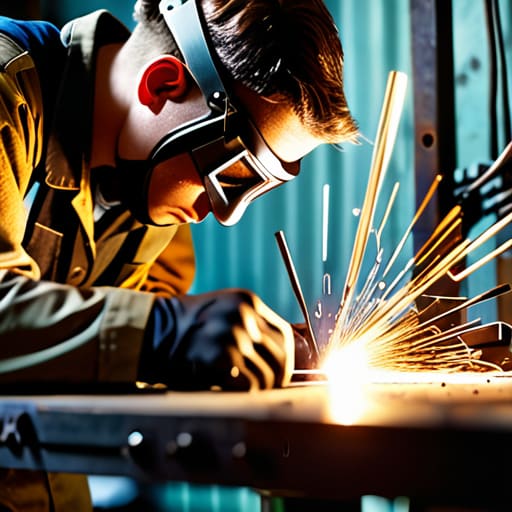
At the end of the day, being a real fabricator isn’t about how fast you can strike an arc or how many fancy power tools you’ve got cluttering up your bench. It’s about the foundation you build. You’ve got to respect the science of the metal, keep your workspace clean enough to actually find your measurements, and never—and I mean never—sacrifice your safety for the sake of a deadline. If you skip the fundamentals of metallurgy or treat your safety gear like an afterthought, you aren’t just risking a bad weld; you’re risking your livelihood. Mastery comes from the slow, steady accumulation of these small, disciplined habits that separate a mere operator from a true craftsman.
Don’t get discouraged if your first few attempts look more like scrap than art. I’ve spent forty years in shops just like yours, and I can tell you that even the best hands in the business started out with shaky grips and ruined pieces. The difference between those who succeed and those who quit is simply the willingness to keep showing up. Take your time, listen to the sound of the hammer, and treat every piece of steel with the respect it deserves. If you commit to doing things the right way from the very first spark, you won’t just be making things; you’ll be building a legacy that lasts long after you’ve hung up your apron.
Frequently Asked Questions
How do I know if I'm actually reading the color of the steel correctly, or if I'm just guessing by the glow?
Look, if you’re just squinting at the glow and hoping for the best, you aren’t reading the steel; you’re gambling with it. The trick is to stop looking at the brightness and start looking at the hue. Get a piece of white ceramic or a scrap of light-colored tile nearby. Hold it near the metal. If the steel looks cherry red against that white background, you’ve got your baseline. Without a reference point, your eyes will lie to you every single time.
If I'm working in a small home shop instead of a big industrial facility, what are the most critical safety tools I can't afford to skip?
Look, a garage shop isn’t a factory, but the metal doesn’t care where you’re standing when it flies. First, don’t skimp on a proper auto-darkening welding helmet; your eyes are your livelihood. Second, get a decent bench grinder with a spark shield and a high-quality respirator. Dust and fumes in a small space build up fast. Lastly, keep a Class ABC fire extinguisher within arm’s reach. If you can’t afford the gear, you can’t afford the work.
When I'm starting out, should I focus more on perfecting my welding beads or getting my hand-tool precision down first?
Listen, I see this mistake all the time. Folks want to jump straight to the welder because it looks impressive, but a welder won’t fix a poorly prepared joint. You need to get your hand-tool precision down first. If your measurements are off or your edges aren’t square, you’re just melting metal into a mess. Master the file, the square, and the grinder. Build the foundation with your hands before you try to fuse it.
